Free body language test
Twelve real moments. Some of them contain a genuine signal. Some of them contain a person who is simply cold, or sitting on an awkward stool, or holding a knife. This test scores both — what you catch, and what you invent.
12 questions · about 3 minutes. Recognizing when there isn’t enough to go on is part of your score. Runs in your browser — nothing is sent anywhere and nothing is stored.
1 of 12
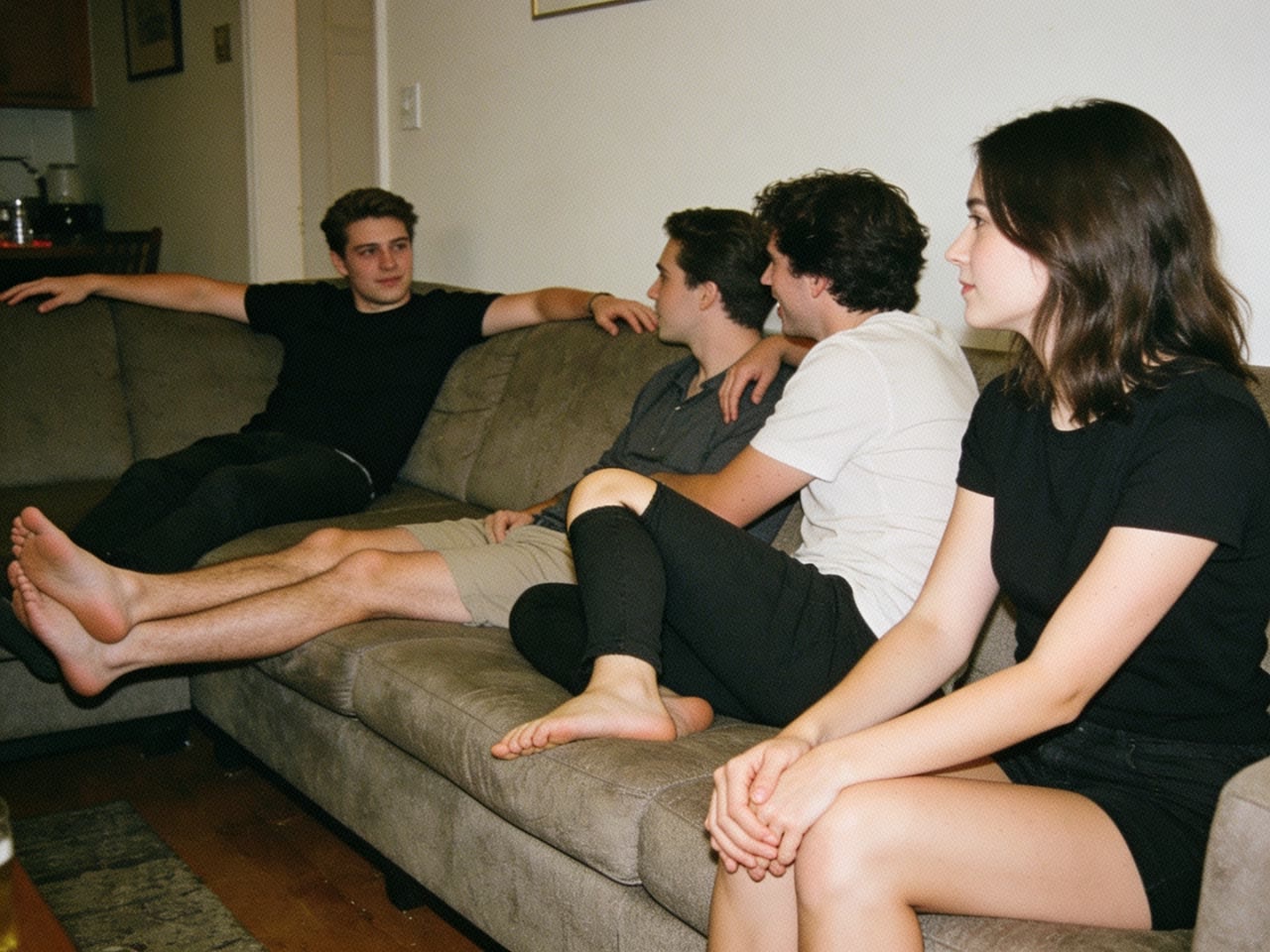
Five of you are along a sofa at a house party. You glance along it at one of them.
Everyone else is sprawled out taking up as much room as they like. This one is perched on the front edge of the cushion, arms pinned to their sides, both hands held together in their lap, knees together — occupying as little space as they can.
What does this support?
Best read They don’t feel entitled to the space — new to the group, or not sure they’re wanted here.
How much room someone takes up is one of the more readable body cues, because it’s a slow postural setting rather than a fleeting gesture. And as in question 4, the information is in the contrast: same sofa, same evening, four people sprawled and one folded in. It’s worth reading mainly because it’s actionable — that’s the person to ask a direct question to. “That’s just how they sit” is a reasonable read, and the honest limit of the cue: it supports “doesn’t feel entitled to the space here, right now,” not a verdict about who they are.
2 of 12
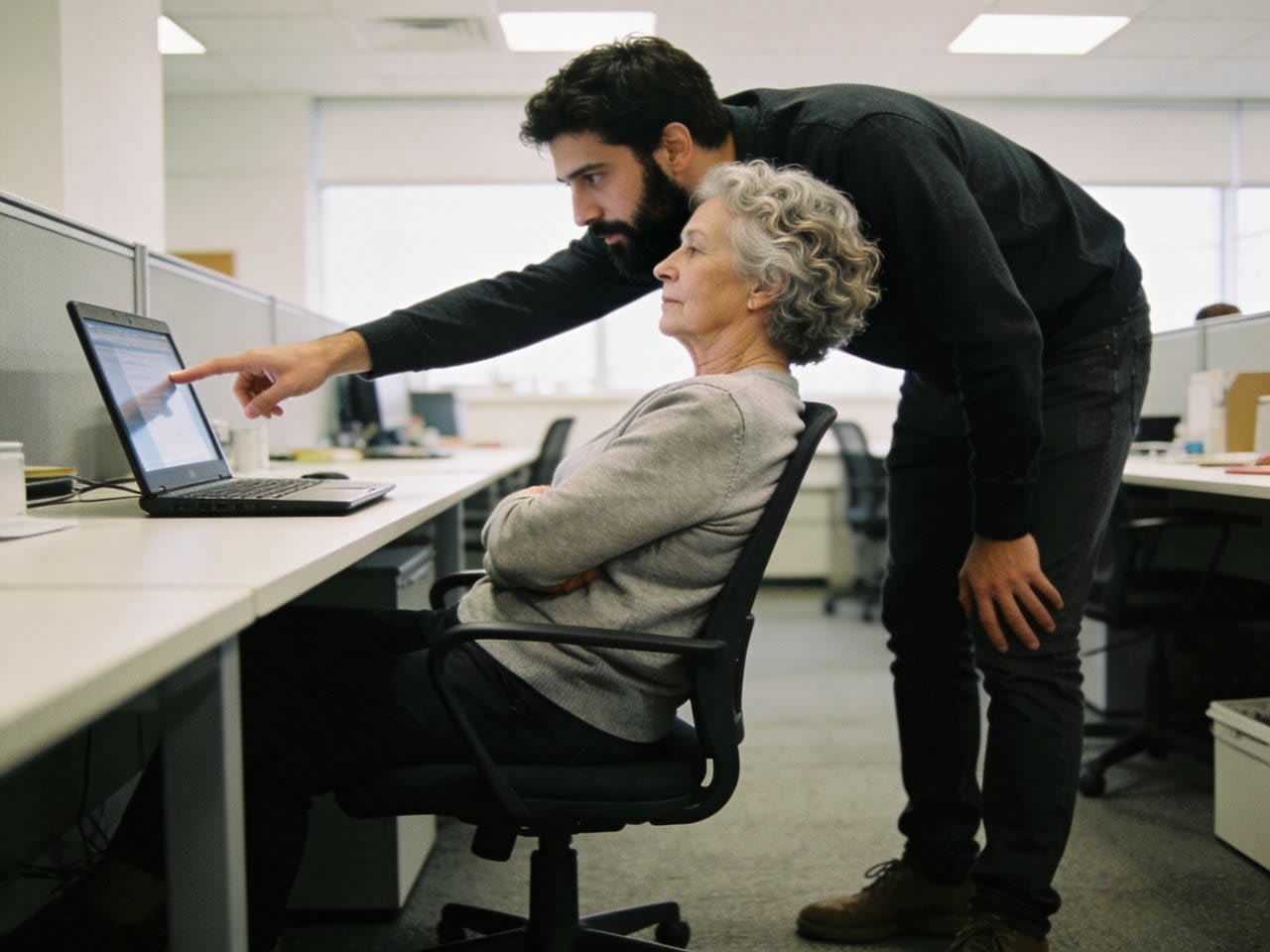
A colleague comes over to show you something on your screen.
They lean right in over the desk to point. You lean back and tuck your chin. They stay exactly where they are and keep talking.
What does this support?
Best read They’re absorbed in the screen and haven’t registered that you moved.
Someone failing to notice your lean-back is far more often attention narrowed onto a task than a decision about you. The useful read here isn’t about their character — it’s that the cue you’re sending isn’t landing, so you’ll have to say it out loud. “Comfortable enough not to think about it” is reasonable and lands in the same place.
3 of 12
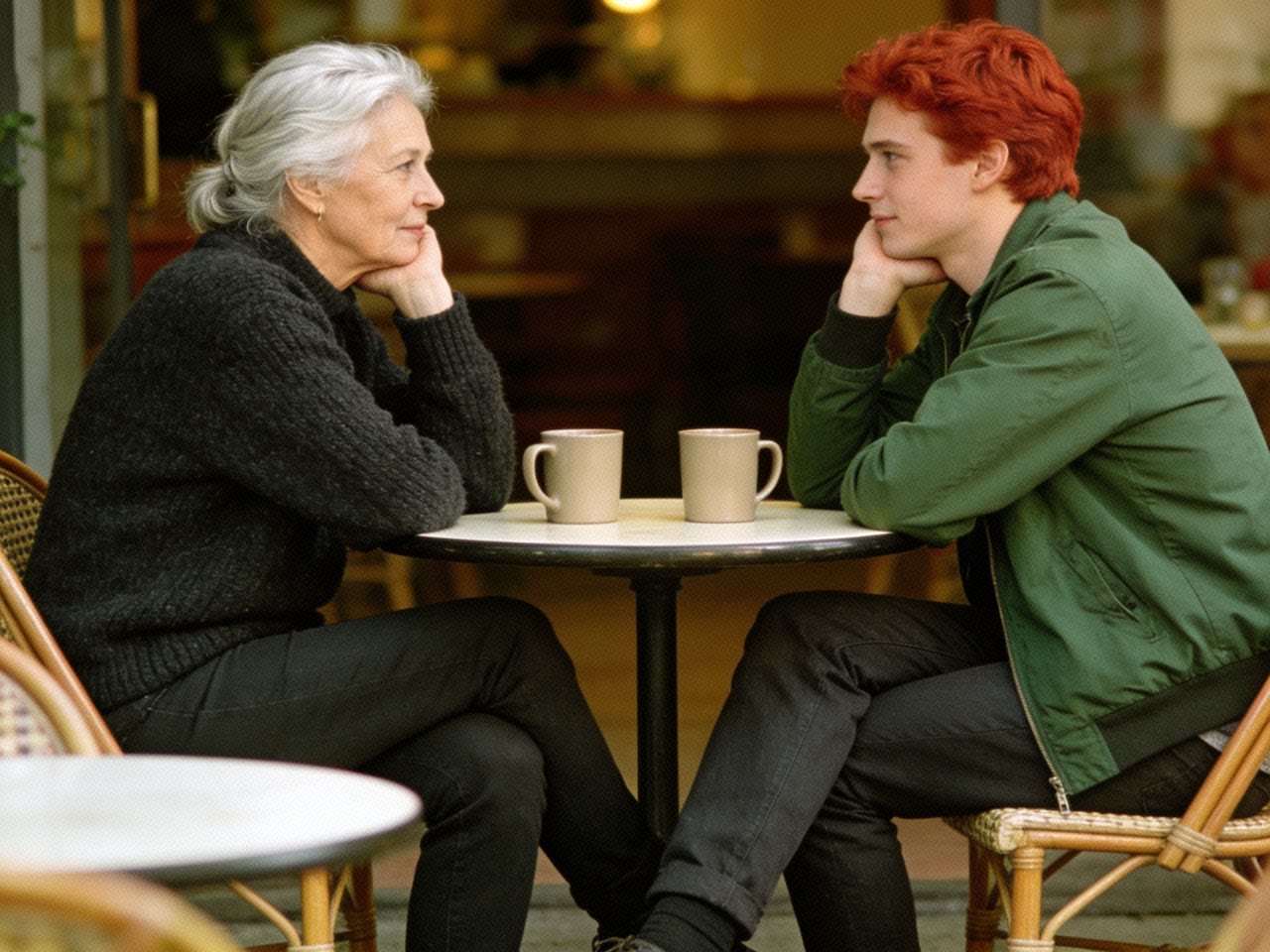
You glance over at two friends talking at the next table.
They’re leaning on the same elbow at the same angle, legs crossed the same way, shoulders loose.
What does this support?
Best read They’re in sync — the conversation is going well.
Postural mirroring mostly happens below awareness, and it tends to follow rapport rather than create it. Which is why deliberately copying someone rarely works the way the advice books promise — you’d be manufacturing the output and hoping the input turns up. “Coincidence” is a reasonable read: one matched posture would be, three at once is less likely to be.
4 of 12

You’re in a meeting that’s been running an hour.
Everyone is leaning toward the table except one person, who has rolled their chair back, folded their arms, and is looking down at the tabletop.
What does this support?
Best read They’ve checked out of this one; the contrast with the room is the cue.
Folded arms on their own are near-useless — you’ll meet the same folded arms again at question 9. What carries information here is that one person is doing something different from everyone else in the same room: same temperature, same chairs, same hour. Contrast within a setting is one of the few genuinely reliable body-language signals. “Cold, or just how they sit” is a reasonable caution — it’s the right instinct, applied to the one item where the room rules it out.
5 of 12

You’re both early for a meeting that one of you has to present in.
They’re standing off to the side turning their phone over in both hands — face down, face up, face down — without ever once looking at the screen.
What does this support?
Best read They’re nervous about what’s coming.
Handling an object without using it is a self-soothing movement — the hands need something to do, and the phone is the nearest thing. The detail that carries the read is that they never look at the screen: someone bored or waiting on a message would. “Bored and killing time” is reasonable — it’s the same fidget with a smaller claim attached. And note what the honest read does not license: nerves are not evidence of guilt. Anxious and dishonest look alike from the outside, which is exactly why “they’re hiding something” is a misread and not a clever one.
6 of 12

Someone is explaining a decision to the team.
Both hands out, palms turned up and open, shoulders dropped, body squared to the room, feet planted evenly.
What does this support?
Best read They’re being straightforward — nothing much is being guarded.
Open palms with a squared, settled stance reads as candour, and usually is. Hold it lightly though: this is the single easiest cluster in the world to perform on purpose, which makes it a weak signal in high-stakes situations and a decent one in ordinary ones. “They’ve been coached” is a reasonable read for exactly that reason. The “it’s a cover” answer is the trap — treating an open signal as proof of concealment makes the cue unfalsifiable, and an unfalsifiable cue is worthless.
7 of 12

You’re on a video call. The other person has been leaning back in their chair for ten minutes.
Mid-sentence — yours — they come forward, put both forearms flat on the desk and lift their chin toward the screen.
What does this support?
Best read Something you just said got their attention.
The cue isn’t the posture, it’s the change — and its timing. Someone moving from reclined to forward mid-sentence has usually just re-engaged with the specific thing being said. The actionable part is to notice what you’d just said; that’s the information, not the forearms. “About to speak” is reasonable and often follows.
8 of 12
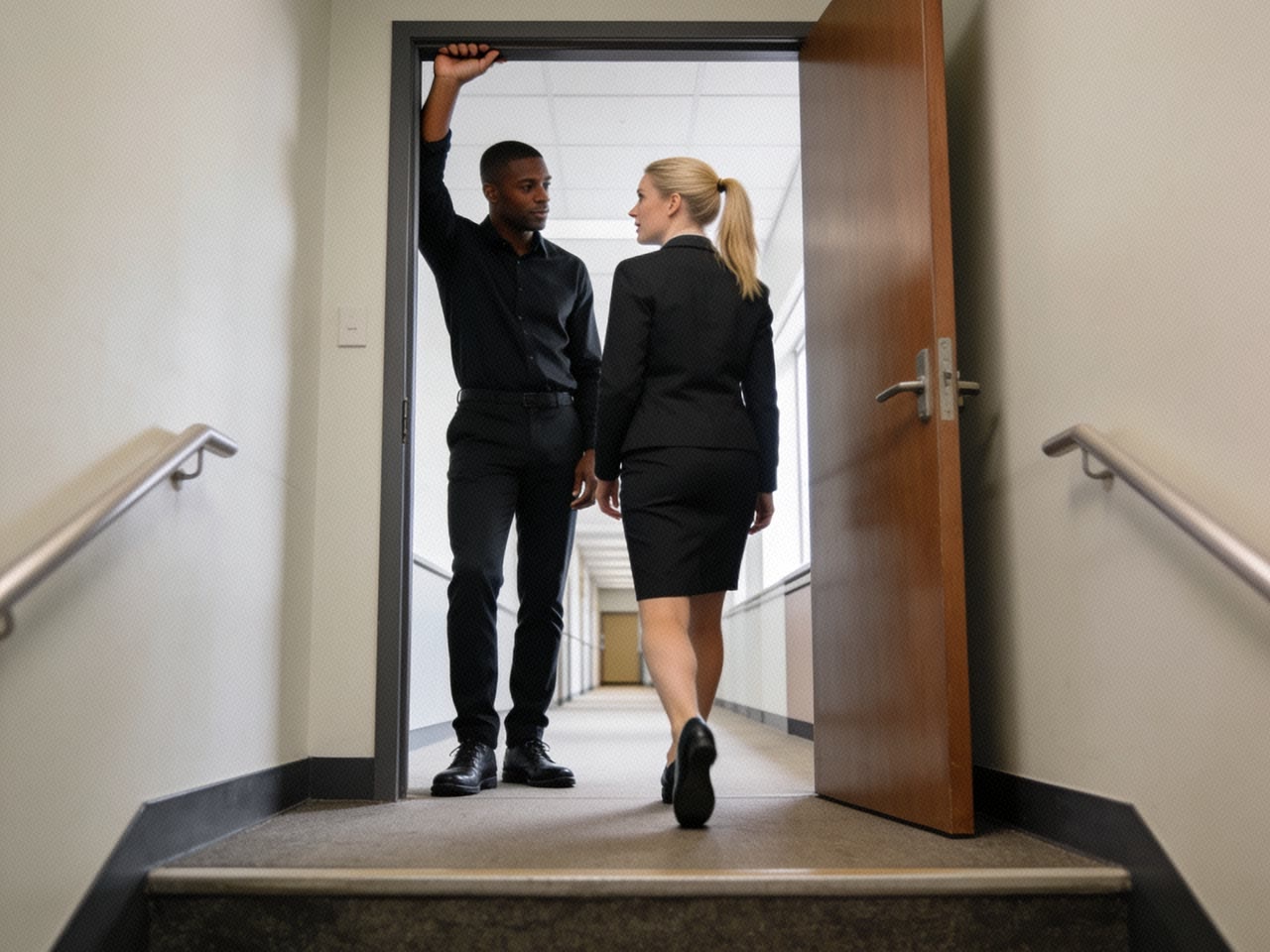
Two colleagues are talking in a doorway as you pass.
One stands square in the doorway with a hand braced high on the frame. The other has turned the lower half of their body out into the corridor, head still angled back.
What does this support?
Best read The conversation has ended for one of them and not the other.
A body split like that — face still in the conversation, hips already out of it — is one of the more legible cues there is, and it’s usually about time rather than about the topic. The braced arm on the frame is the other half of it: one person has settled in and the other hasn’t. “Late for something unrelated” is reasonable — it’s the same read without assuming the conversation caused it.
9 of 12
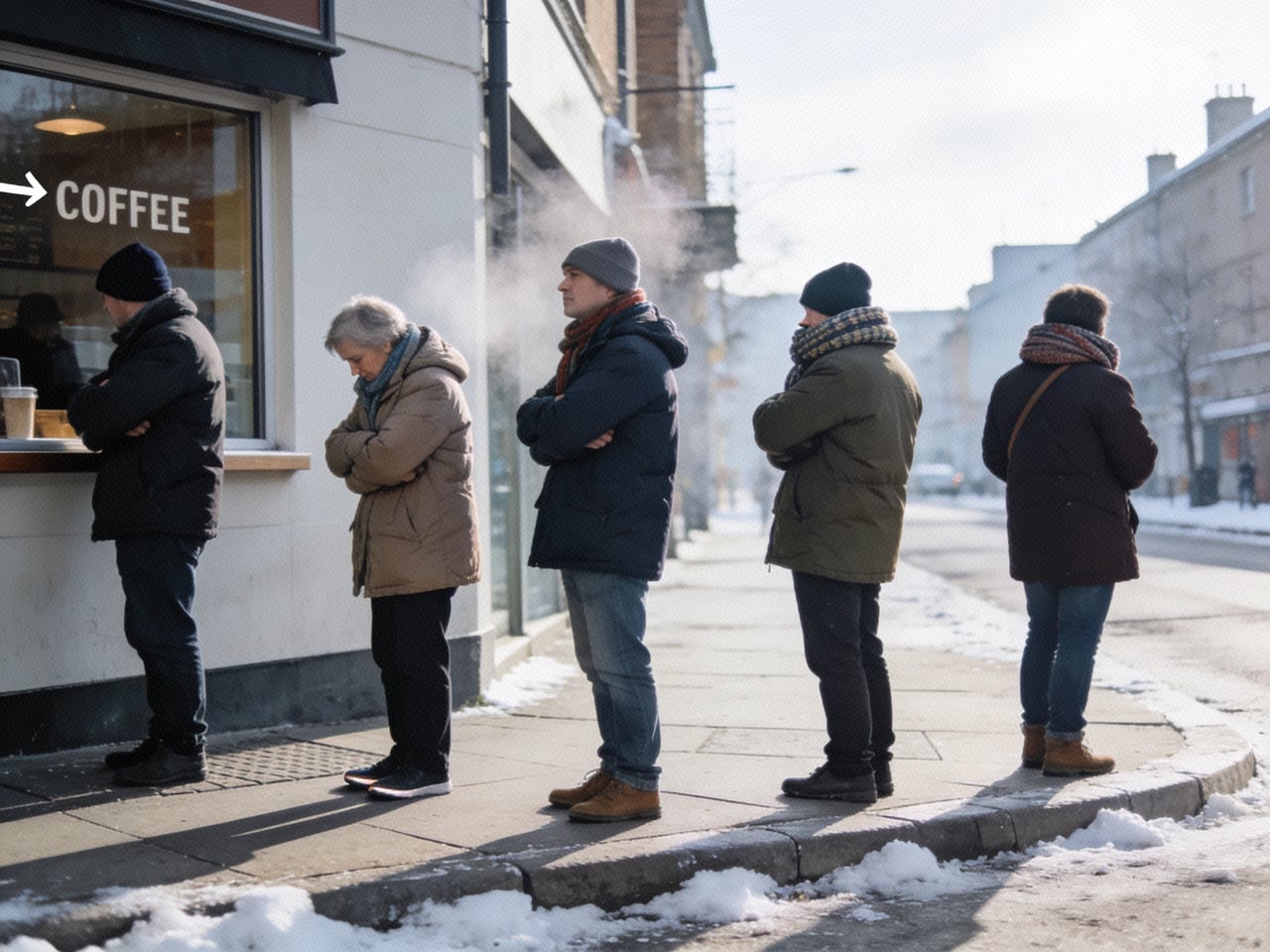
You join the back of a queue outside a coffee window. It’s near freezing.
Most of the line has their arms folded tight across their chests, shoulders drawn up.
What does this support?
No reliable read Nothing about any of them — folded arms is what cold looks like.
This is the most over-read posture there is. Before treating folded arms as an attitude, check whether the setting has a duller explanation: temperature, no armrests, holding a bag, or simply a comfortable way to stand. Here the coats and the breath answer it before psychology gets a turn. “Cold and a bit fed up” is a reasonable read — it stays inside what the scene supports. Compare this with question 4, where the same folded arms did mean something, because one person was doing it and five weren’t.
10 of 12
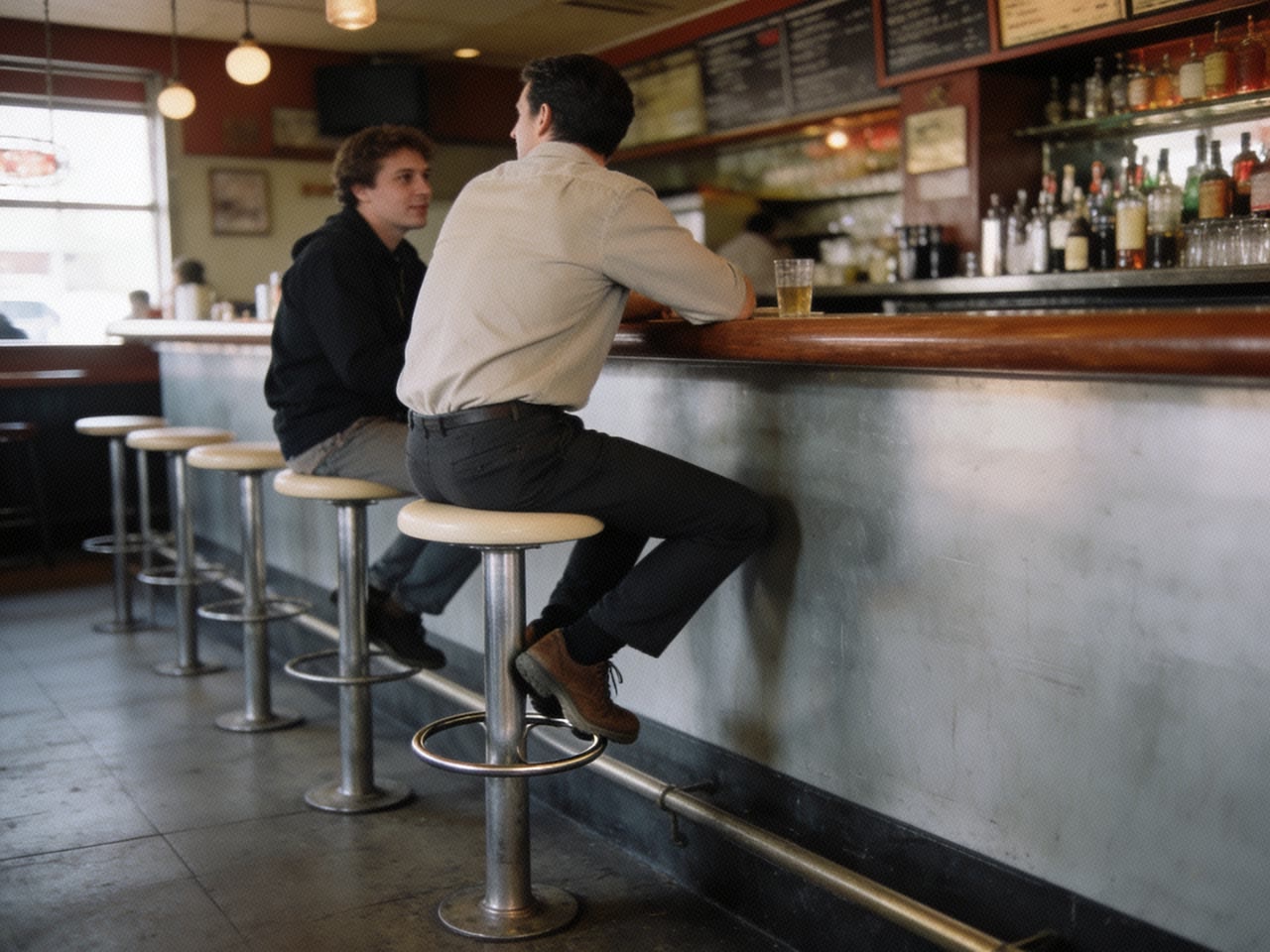
You’re at a bar, talking to someone perched on a backless stool.
Their torso is angled away from you rather than square on, and it stays that way the whole time.
What does this support?
No reliable read The furniture is setting the angle, not the feeling.
Orientation is a real cue right up until the furniture takes the decision away. Backless stools, booth seating, cinema rows and car seats all impose an angle. Check what the person could physically do before reading what they chose to do. “Hard to say from posture alone” is reasonable — it reaches the same restraint by a slightly vaguer route.
11 of 12

You’re talking to someone while they make dinner.
They barely look up. Their eyes stay down on the chopping board the whole time.
What does this support?
No reliable read Nothing much — they’re holding a knife, and the task has their eyes.
Gaze aversion is the most over-interpreted cue in circulation, and “they wouldn’t look at me” is its classic form. Before it means anything, rule out the boring causes: a task, a screen, driving, thinking hard, or simply being someone who finds eye contact effortful. Here it’s a knife. “You’d need to hear how they’re answering” is reasonable, and it’s the better instinct — it moves you to a channel that actually carries signal.
12 of 12
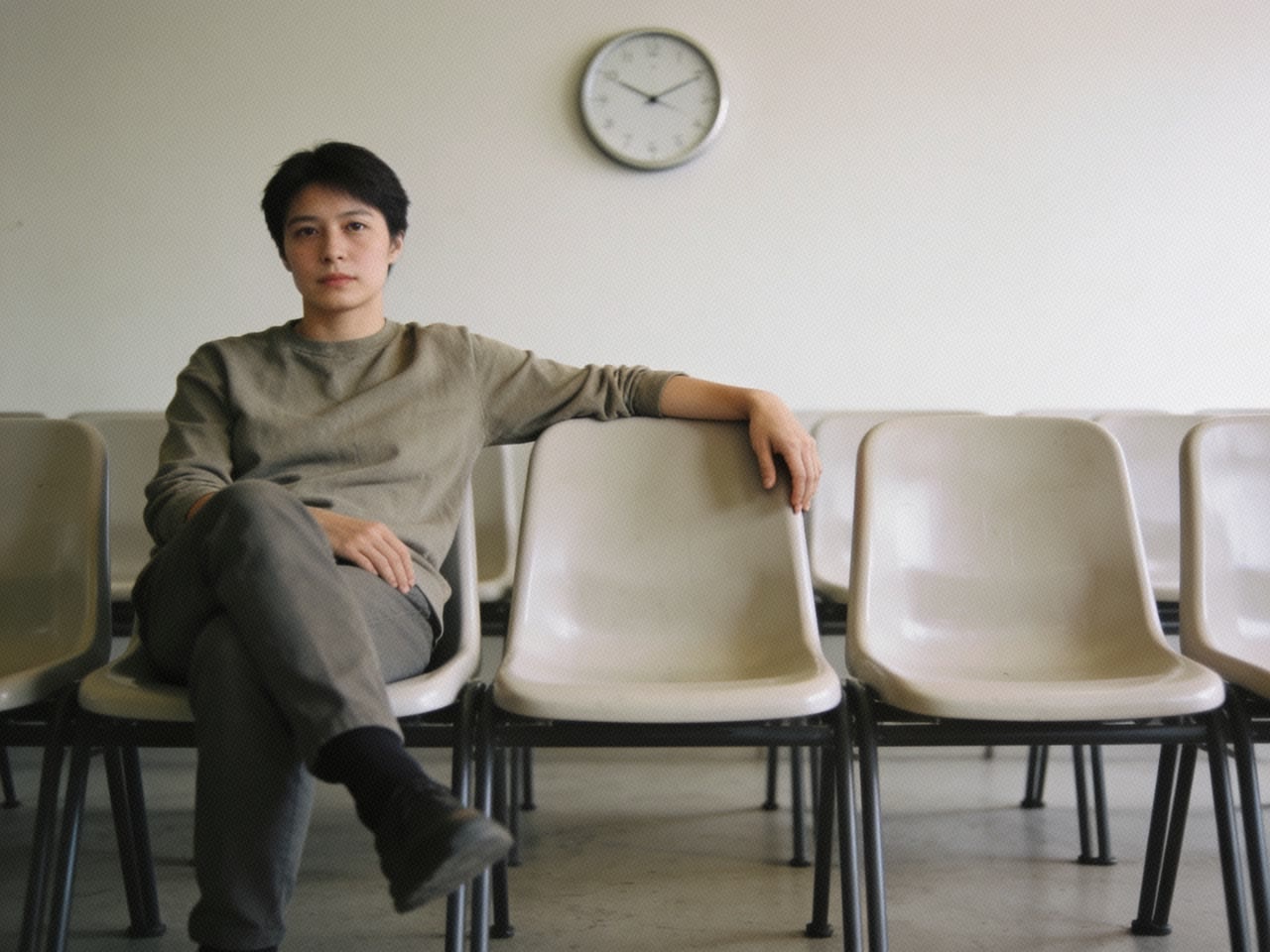
You’re in a waiting room. You’ve both been there forty minutes.
The person opposite keeps shifting and re-crossing their legs on a hard plastic chair.
What does this support?
No reliable read Could be nerves, could be the chair — there’s no way to separate them here.
Fidgeting is a real discomfort signal that tells you almost nothing about the source of the discomfort. In a waiting room, physical and emotional discomfort look identical. The honest answer isn’t that you should guess better — it’s that this particular scene can’t distinguish them, and saying so is the skill. “Bored” is reasonable; it’s one of the several things this could be.
Your result
0/8
Sensitivity
When there was a real signal, you caught it.
0/4
Restraint
When there wasn’t one, you didn’t invent one.
Both halves get better with reps.
Level 1 of the body language track is free — no sign-up, no ads.
What this test is measuring
And, just as importantly, what it isn’t.
Sensitivity, not talent
Whether you picked up the eight items where the body genuinely carried information. This is the half every other body-language quiz measures, and on its own it’s misleading — you can max it by treating everything as meaningful.
Restraint, the half nobody scores
Four items have no reliable read. A cold queue, a backless stool, a chopping board, a plastic chair. Declining to invent meaning is a skill, and in daily life it’s probably the more useful one — most bodies, most of the time, mean nothing in particular.
Not a lie detector
Nothing here scores whether you can spot deception, because that ability doesn’t reliably exist. The largest meta-analysis of deception judgments puts people at 54% against a 50% coin flip. Any test claiming otherwise is measuring your confidence, not your accuracy.
Not a diagnosis
Twelve items is a conversation starter, not an assessment. It isn’t clinical, it isn’t normed against a population, and a low score means you haven’t practiced this — not that something is wrong with you.
Want the other two?
The eyes and faces tests take about two minutes each.
Related: the body language app · where “93% of communication is body language” came from · five tips that hold up in the research · the cue glossary.